Candy Christmas Venti Cold Cup SVG Review
Some designs arrive with a mood already built in. The first time I opened the Candy Christmas Venti Cold Cup 24oz SVG, I felt an immediate wave of playful nostalgia—the kind that makes you think of peppermint bark, candy cane stripes, and the cheerful chaos of a holiday craft fair. As someone who has spent years testing embroidery-ready artwork and graphics for real product use, I don’t get excited easily. But this design has a clear, confident voice. It’s not trying to be elegant or understated. It’s bold, sweet, and unapologetically festive, and that is exactly what makes it a strong candidate for certain handmade projects. The visual personality is rooted in classic candy shop colors—think vibrant reds, crisp whites, and cool minty greens—all arranged in a pre-sized wrap layout that fits the 24oz Venti cold cup. But a cup wrap is just the beginning. When I evaluate a graphics file like this for embroidery applications, I look for silhouette quality, detail level, and how the shapes translate into thread and fabric. Right away, I could see it working as an applique design, a decorative patch, or a centerpiece motif on a holiday tote bag.
Visual Character and Mood
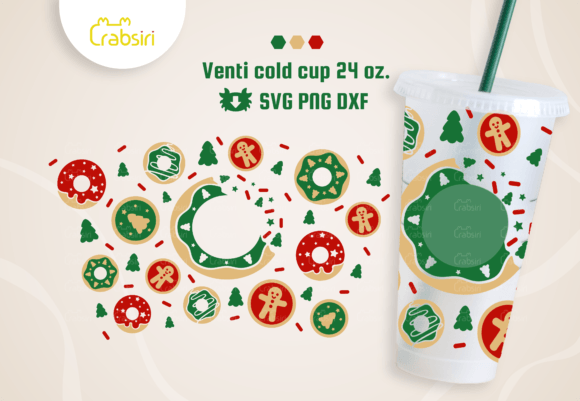
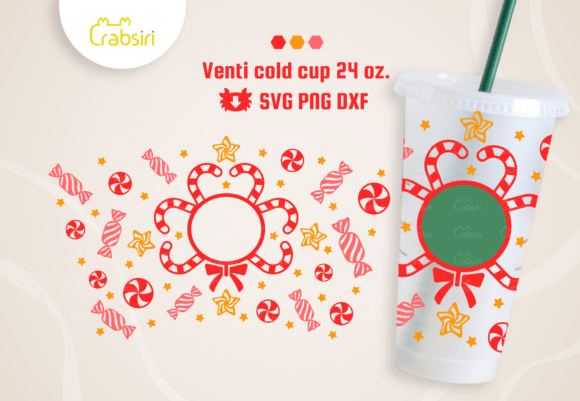
The Candy Christmas Venti Cold Cup 24oz SVG leans into a candy theme with swirling peppermint motifs, rounded candy drops, and stripe elements that feel like they were pulled from a vintage sweet shop. The layout is designed to wrap around a cylindrical surface, which means the composition has a natural flow. When you flatten it out for embroidery, the design reads horizontally, which suits a wide variety of products—think across the chest of a sweatshirt, along the side of a tote bag, or even as a border on a kitchen towel. The mood is cheerful and inviting, the kind of design that makes a customer smile before they even pick up the product. For a small business owner or Etsy seller, that emotional connection is pure gold. The stitch potential here is strong: satin stitch for the striped candy sections, a light fill stitch for the larger peppermint discs, and a clean running stitch for any delicate outline details. The high resolution at 300dpi means the reference artwork is crisp, which is a huge help when you’re manually digitizing or tracing for embroidery file conversion.
A Real Project Scenario: The Holiday Tote Bag
Let me walk you through a real-life scenario. Imagine you’re preparing a small batch of personalized holiday tote bags for a boutique pop-up shop. The client wants something festive, recognizable, and giftable. You open the Candy Christmas Venti Cold Cup 24oz SVG and immediately see the potential. Instead of using it only as a cup wrap, you decide to convert a section of the design into an embroidered patch. You isolate the central peppermint swirl and the candy cane border, digitize them with a dense satin stitch, and choose a medium-weight cotton canvas tote in natural beige. The contrast is striking—the bright red and white threads pop against the neutral fabric, and the stitch definition holds up beautifully. You add a layer of tear-away stabilizer, hoop the fabric tight, and run a test stitch-out on scrap first. The result is a polished, professional-looking handmade product that feels far more special than a printed graphic. Customers at the pop-up immediately recognize the Christmas candy theme, and the tactile quality of the embroidery makes the tote bag feel like a premium gift. This is the kind of project where the Candy Christmas Venti Cold Cup 24oz SVG truly shines—not just as a digital file, but as a springboard for a tangible product that builds customer trust and brand consistency.
Fabric and Surface Considerations
Every design has its sweet spot, and this one is no exception. The Candy Christmas Venti Cold Cup 24oz SVG, with its bold shapes and candy-inspired details, works best on stable, medium-weight fabrics. Canvas, denim, and tightly woven cotton are excellent choices. If you’re planning to stitch it on a sweatshirt or a stretchy baby garment, you’ll need to be extra careful. The dense satin stitch sections, if not properly digitized, can distort on knit fabrics. I always recommend using a cutaway stabilizer for any apparel with stretch, and testing on a scrap of the same fabric before committing to the final product. Dark fabrics present another challenge. The design’s festive colors rely on bright contrast, so if you’re stitching on a deep navy or black background, the red and white threads will stand out—but any thin, delicate details might get lost. I’d suggest increasing the stitch density slightly for the outline elements on dark materials, or using a slightly lighter backing to improve visibility. For thin fabrics like a tea towel or a lightweight pillow cover, a water-soluble topper can keep the stitches from sinking in and losing definition. The key is to respect the design’s graphic nature: it’s bold and cheerful, and it needs a fabric canvas that can support that energy without puckering or shadowing.
Embroidery Machine Compatibility and Hoop Size
Since the product description specifies that the wrap is pre-sized for a Venti cold cup, you’ll want to measure the flattened dimensions carefully before committing to a hoop size. A design that wraps around a 24oz cup will likely be wider than a standard 4x4 inch hoop, so a larger hoop—like a 5x7 or 6x10—may be necessary for full coverage. That doesn’t mean you can’t use the design on a smaller hoop; you can always split the artwork into sections or focus on a single motif, such as the peppermint candy or the striped border. The SVG, PNG, and DXF files included in the download give you flexibility. The SVG is particularly useful for resizing without losing quality, which is a huge advantage for embroidery digitizers who need to adapt the design for different projects. The 300dpi PNG is a great reference for creating printable mockups, and the DXF file can be useful for cutting machines if you’re also offering vinyl decals or stencil versions of the same product line. I always advise checking the actual file dimensions after download, because your embroidery software’s import settings can sometimes misinterpret the scale. A quick test in your digitizing program will confirm whether the design fits your preferred hoop size and whether any small details need to be simplified for clean stitching.
Small Details and Stitch Density
One of the first things I inspect in a graphics file meant for embroidery is the intricacy of the small details. The Candy Christmas Venti Cold Cup 24oz SVG has enough visual complexity to be interesting, but not so much that it becomes a digitizing nightmare. Peppermint swirl lines, if they’re too thin, can cause thread breaks or lose definition on textured fabric. I recommend checking the minimum width of any line art in the SVG and adjusting it to at least 1.5mm for a satin stitch or 2mm for a running stitch. If the design includes tiny dots or very fine accents, consider whether they’ll actually read as intended after stitching. Sometimes, simplifying a few details in the digitizing stage actually improves the finished product. The magic of this design lies in its overall candy shop personality, not in microscopic precision. From a customer perspective, the bold shapes and familiar holiday imagery are what sell the product. You don’t need every speck of peppermint dust to be embroidered; the suggestion of sweetness is enough. That’s a valuable lesson for any embroidery designer: sometimes, less stitch density in the right places actually elevates the handmade appeal.
Thread Color Choices and Contrast
Thread color selection can make or break this design. The classic Christmas candy palette is straightforward—true red, bright white, and maybe a hint of green or pink—but the exact shades matter. A slightly off-white thread can look dingy against a bright white fabric, and a deep burgundy red might feel too serious for a candy-themed project. I always test two or three red thread options on the actual fabric before committing. A glossy rayon thread can give the candy stripes a subtle sheen that mimics the look of real peppermint, while a matte polyester thread offers better durability for items that will be washed frequently. The design’s high contrast is a visual strength, but it also means any color mismatch will be glaringly obvious. I’ve learned to do a black-and-white mockup of the design first, just to check the value structure. If the shapes still read clearly in grayscale, then the color version will likely have the right contrast for embroidery. This simple step has saved me hours of rework and disappointed customers.
Product Value for Small Shops and Etsy Sellers
For a creative entrepreneur, the Candy Christmas Venti Cold Cup 24oz SVG is more than just a festive graphic. It’s a design asset that can spawn multiple product types from a single purchase. You can use it to create embroidered patches, customize apparel, make holiday tea towels, embellish aprons, or even stitch a decorative accent on a baby blanket. The pre-sized cup wrap format is a nice bonus, but the real value is in the reusability of the artwork across different handmade projects. When I’m coaching new Etsy sellers, I always emphasize the importance of cohesive branding. A design like this, with its recognizable candy theme, can become a signature seasonal look for a small shop. Customers start to associate that cheerful peppermint swirl with your brand, and that builds trust and repeat business. The fact that the files are provided in SVG, PNG, and DXF formats means you can also use them for printable mockups, digital product previews, and even sublimation blanks, which expands your creative possibilities without additional design costs. Just remember to review the licensing terms carefully before selling finished items or digital products. The description mentions “no wat,” which I interpret as no watermark, so the artwork is clean and ready to use, but always confirm commercial rights if you’re planning to sell the finished embroidery on physical products.
Practical Embroidery Designer Notes
Before you stitch this design for a client, a craft fair, or your online shop, here are the steps I always follow—and I recommend you do the same. Test the design on scrap fabric first, using the exact thread colors and stabilizer you plan to use on the final product. Check the hoop size against the flattened dimensions of the SVG, and don’t assume the pre-sized cup wrap will fit a standard embroidery hoop without adjustments. Review stitch density in your digitizing software; if the design has any lettering, inspect it closely to make sure it won’t close up during stitching. Test it in black and white to confirm contrast, and compare the result on both light and dark fabric backgrounds. Use a proper stabilizer—cutaway for knits, tear-away for wovens, and a topper for plush fabrics. And finally, confirm licensing before you sell any finished products that feature this design. As a graphics product in the Crafts category, the Candy Christmas Venti Cold Cup 24oz SVG is a versatile tool, but your responsibility as a maker is to use it thoughtfully and professionally.
I’ve seen too many promising designs fail because a small detail was overlooked. This one, with its bold candy personality and clean lines, has the potential to be a holiday bestseller. Treat it with the same care you would give any custom embroidery project, and your finished products will reflect that quality. The design’s appeal is instant, but the craftsmanship behind it is what makes a customer pick it up, smile, and hand over their money. That’s the real test of any embroidery-ready graphic, and I believe this one passes with flying candy stripes.